The Berlin Wall was one of the most powerful symbols of the Cold War and the division of Europe during the second half of the 20th century. For nearly three decades, it separated families, friends, and an entire city while representing the ideological conflict between communism and democracy. Its construction in 1961 and dramatic fall in 1989 remain among the most significant events in modern history.
Following the end of World War II in 1945, Germany was divided into four occupation zones controlled by the Soviet Union, the United States, the United Kingdom, and France. Although Berlin was located deep inside the Soviet-controlled zone, the city itself was also divided among the four victorious powers. As tensions between the Soviet Union and the Western Allies increased, Berlin became a focal point of the growing Cold War.
In 1949, Germany officially split into two separate states. West Germany developed into a democratic nation with a market economy, while East Germany became a communist state aligned with the Soviet Union. Over the following years, many East Germans became dissatisfied with economic conditions and political restrictions. Millions left East Germany for the West, often using Berlin as an escape route.
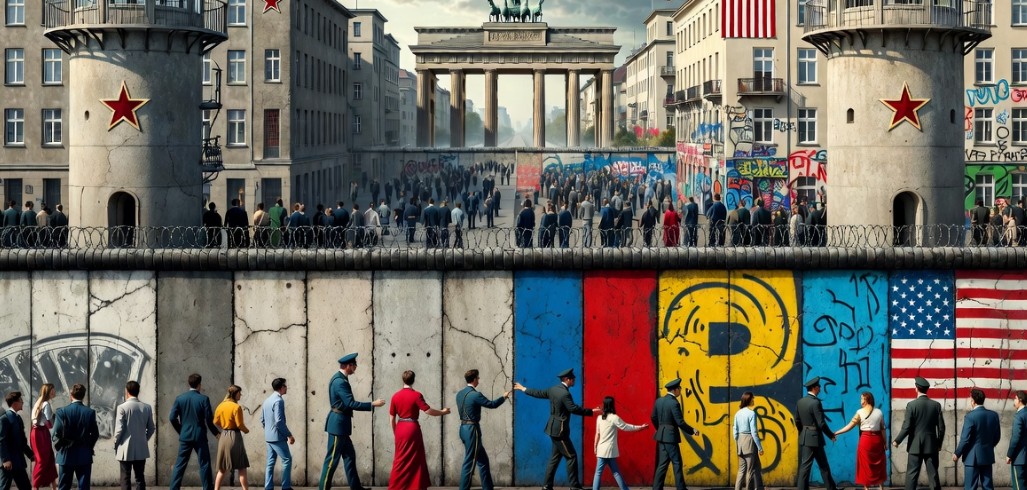
Concerned about the massive loss of skilled workers and young professionals, East German authorities decided to close the border. During the night of August 13, 1961, soldiers and workers began installing barbed wire barriers throughout Berlin. These temporary barriers were later replaced with concrete walls, guard towers, floodlights, and heavily guarded security zones. The structure eventually became known worldwide as the Berlin Wall.
Life on either side of the wall was dramatically different. West Berlin became a symbol of political freedom and economic prosperity, while East Berlin remained under strict communist control. Families who had lived in the same city for generations suddenly found themselves separated. Many people lost daily contact with relatives, friends, and coworkers who lived on the other side of the barrier.
Despite the dangers, numerous East Germans attempted to escape. Some dug underground tunnels, while others hid in modified vehicles or crossed the border using creative and risky methods. A few even escaped in homemade hot-air balloons. Although thousands succeeded, many were captured, imprisoned, or killed while trying to reach the West. These stories highlighted the human cost of Germany’s division.
Throughout the Cold War, the Berlin Wall became an international symbol of oppression and political separation. In 1963, U.S. President John F. Kennedy visited West Berlin and delivered his famous speech declaring, “Ich bin ein Berliner,” expressing solidarity with the city’s residents. More than two decades later, in 1987, President Ronald Reagan called on Soviet leader Mikhail Gorbachev to remove the barrier, famously stating, “Mr. Gorbachev, tear down this wall!”
By the late 1980s, political changes were sweeping across Eastern Europe. Communist governments faced growing pressure from citizens demanding reforms, greater freedoms, and democratic elections. Large demonstrations took place throughout East Germany, and the government struggled to maintain control.
On November 9, 1989, a government spokesperson unexpectedly announced that East German citizens would be allowed to cross the border. The announcement created confusion, but thousands of people quickly gathered at crossing points. Unable to contain the crowds, border guards opened the gates. Celebrations erupted as people crossed freely between East and West Berlin for the first time in nearly three decades.
That night, crowds climbed onto the wall and began dismantling it with hammers and other tools. Images of joyful Berliners standing atop the wall were broadcast around the world and quickly became symbols of freedom and political change. The event marked a major turning point in European history and signaled the approaching end of the Cold War.
Less than a year later, on October 3, 1990, East and West Germany officially reunited. German reunification reshaped Europe and contributed to the broader collapse of Soviet influence across the continent. The fall of the Berlin Wall demonstrated how rapidly political systems can change when faced with sustained public demand for freedom.
Today, most of the Berlin Wall has disappeared, but several sections remain preserved as historical landmarks and memorials. Visitors from around the world travel to Berlin to see these remnants and learn about the experiences of those who lived through one of the most divided periods in modern history.
More than three decades after its fall, the Berlin Wall continues to serve as a reminder of the consequences of political division and the enduring human desire for liberty, unity, and self-determination. Its story remains one of the defining chapters of the twentieth century and an enduring symbol of the triumph of freedom over separation.