Introduction
Gold has been one of the most valuable assets in human history for thousands of years. Even in today’s digital economy, central banks continue to hold massive amounts of gold as part of their national reserves. Gold is often considered a safe-haven asset because it helps countries protect their wealth during economic crises, inflation, geopolitical conflicts, and currency instability.
In recent years, many countries have increased their gold reserves as a way to diversify away from dependence on foreign currencies and strengthen confidence in their financial systems. While modern economies rely heavily on electronic transactions and fiat currencies, gold remains a strategic asset that plays an important role in global finance.
This article explores the countries with the largest official gold reserves and explains why gold continues to be a critical component of national wealth.
Top 10 Countries by Official Gold Reserves
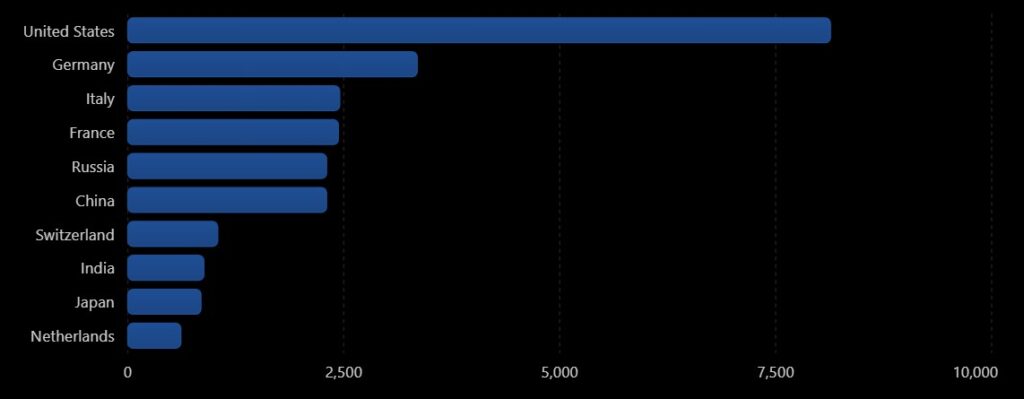
The following chart shows the countries with the largest gold reserves held by their central banks.
Top 10 Countries by Gold Reserves
Official gold reserves held by central banks (tons).
Ranking of the Top 10 Gold-Holding Nations
| Rank | Country | Gold Reserves (Tons) |
|---|---|---|
| 1 | United States | 8,133 |
| 2 | Germany | 3,350 |
| 3 | Italy | 2,452 |
| 4 | France | 2,437 |
| 5 | Russia | 2,300 |
| 6 | China | 2,300 |
| 7 | Switzerland | 1,040 |
| 8 | India | 880 |
| 9 | Japan | 846 |
| 10 | Netherlands | 613 |
Why Does the United States Hold So Much Gold?
The United States possesses more than twice as much gold as any other country. Most of this gold is stored in highly secure facilities, including the famous Fort Knox depository. America’s large gold reserves are a legacy of its economic dominance during the twentieth century, particularly after World War II.
Although the U.S. dollar is no longer backed directly by gold, these reserves continue to strengthen confidence in the country’s financial system and provide an important reserve asset during periods of uncertainty.
Germany’s Massive Gold Stockpile
Germany holds the second-largest gold reserve in the world. Following decades of strong economic performance and trade surpluses, the country accumulated significant reserves through its central bank.
German policymakers consider gold an important safeguard against financial instability. Over the last decade, Germany has also transferred part of its gold holdings back from foreign vaults to storage facilities within the country.
Italy and France: Europe’s Gold Giants
Italy and France rank third and fourth globally. Despite having different economic structures, both countries have maintained substantial gold reserves for decades.
These holdings provide financial security and represent a significant component of each nation’s reserve assets. Unlike some countries that actively buy or sell gold, Italy and France have generally maintained stable reserve levels.
Russia’s Gold Accumulation Strategy
Russia has dramatically increased its gold reserves over the past two decades. The country has pursued a strategy of reducing reliance on foreign currencies and strengthening its financial independence.
Gold purchases have become a key element of Russia’s reserve management policy, helping the country diversify its assets and reduce exposure to international financial risks.
China’s Growing Gold Reserves
China, the world’s second-largest economy, has steadily expanded its gold holdings. Many analysts believe that China views gold as a strategic asset that can support long-term financial stability.
As China continues to play a larger role in the global economy, its gold reserves may become increasingly important in international monetary affairs.
Why Central Banks Buy Gold
Central banks purchase gold for several reasons. First, gold acts as a hedge against inflation because it tends to retain value over long periods. Second, it provides diversification, reducing dependence on any single currency.
Gold is also highly liquid, meaning it can be sold relatively quickly if needed. During financial crises, investors and governments often turn to gold as a safe store of value.
Gold and Economic Security
Many economists view gold reserves as a form of national financial insurance. While gold does not generate interest like bonds or dividends like stocks, it offers stability during periods of market turbulence.
Countries with substantial gold reserves may have greater flexibility when responding to economic shocks, currency fluctuations, or geopolitical tensions.
Gold Production vs. Gold Reserves
It is important to distinguish between gold production and gold reserves. Some countries produce large quantities of gold but do not necessarily hold large official reserves.
For example, Australia is one of the world’s leading gold producers and possesses enormous underground gold resources. However, its official central bank gold reserves are much smaller than those of the United States, Germany, or Italy.
The Future of Gold Reserves
As global economic uncertainty continues, many experts expect central banks to remain active buyers of gold. Rising geopolitical tensions, inflation concerns, and efforts to diversify reserve portfolios are likely to support continued demand.
Several emerging economies have already increased their gold purchases in recent years, suggesting that gold will remain a key strategic asset well into the future.
Conclusion
Gold has maintained its importance throughout centuries of economic change. Despite the rise of digital banking, cryptocurrencies, and modern financial markets, central banks still view gold as one of the safest reserve assets available.
The United States remains the clear leader with more than 8,000 tons of gold, while Germany, Italy, France, Russia, and China also hold substantial reserves. Together, these nations control a significant portion of the world’s official gold holdings.
As economic and geopolitical challenges evolve, gold is likely to continue serving as a symbol of financial strength, stability, and national security for countries around the world.
Sources:
- World Gold Council – Gold Reserves by Country
- International Monetary Fund (IMF) Data Portal
- U.S. Treasury – Gold Reserve Information
Published on February 6, 2026 · Last updated on February 6, 2026