The Kalahari Desert is one of the most remarkable natural regions in Southern Africa. Although it is commonly called a desert, the Kalahari is not a true desert in the strict sense because it receives more rainfall than most deserts. This allows grasses, shrubs, and various plant species to grow across large parts of the region. Covering more than 900,000 square kilometers, the Kalahari extends across Botswana, Namibia, and South Africa.
The name “Kalahari” is believed to originate from the Tswana language and is often translated as “the great thirst” or “a waterless place.” This name reflects the challenging environmental conditions of the region, where water is one of the most valuable resources for both humans and wildlife.
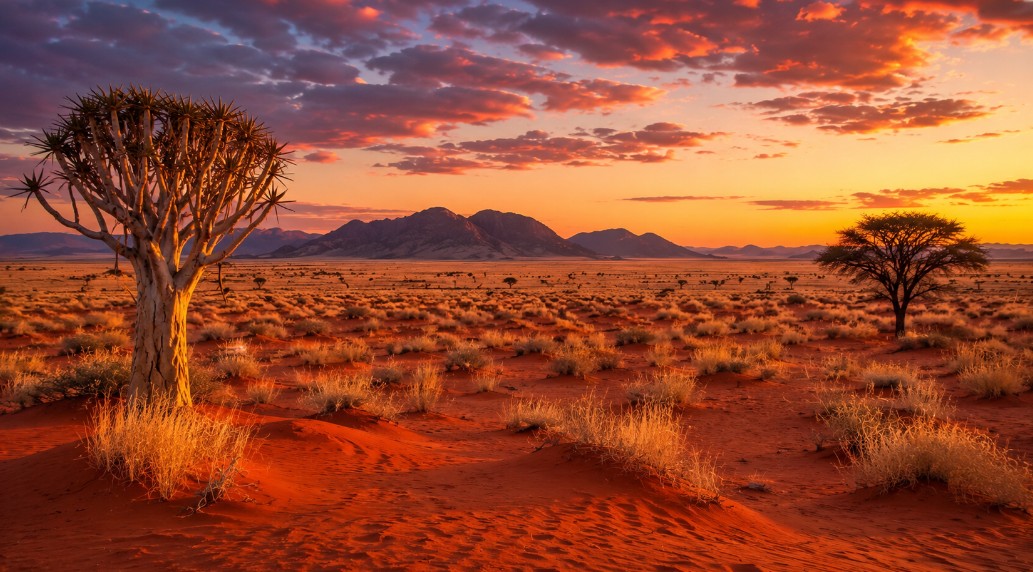
The landscape of the Kalahari is famous for its vast red sand dunes. These dunes were formed over thousands of years through the action of wind. Their distinctive reddish color comes from iron oxide, giving the desert its unique and striking appearance.
The climate of the Kalahari is harsh and extreme. During the summer months, daytime temperatures often exceed 40°C (104°F), while winter nights can drop below freezing. These dramatic temperature changes require plants and animals to develop special adaptations in order to survive.
Despite the difficult conditions, the Kalahari supports a rich variety of wildlife. Lions, leopards, cheetahs, African wild dogs, and many other predators roam the region. Their presence demonstrates the resilience and diversity of the desert ecosystem.
One of the most famous inhabitants of the Kalahari is the black-maned lion. Known for its impressive appearance, this lion has become a symbol of the region. Its dark mane distinguishes it from many other African lion populations.
Various species of antelope also thrive in the Kalahari. Among them, the gemsbok, or oryx, is particularly well adapted to desert life. It can survive for long periods without drinking water, obtaining much of the moisture it needs from plants and food sources.
The desert is home to a wide range of bird species. Eagles, vultures, ostriches, and many other birds can be found throughout the region. These birds play an important role in maintaining ecological balance and supporting biodiversity.
Reptiles are another significant part of the Kalahari ecosystem. Numerous species of snakes and lizards have adapted to the sandy environment and high temperatures. Many are capable of moving quickly across hot sand and finding shelter during the hottest parts of the day.
Although vegetation is relatively sparse, the Kalahari is far from lifeless. During the rainy season, large areas become covered with green grasses and wild plants. This seasonal transformation provides an abundance of food for herbivores and contributes to the region’s ecological productivity.
Acacia trees and thorny shrubs are common throughout the desert. Their deep root systems allow them to access underground moisture, helping them survive in an environment where rainfall is limited and unpredictable.
The Kalahari has been inhabited by humans for thousands of years. The San people, often regarded as one of the world’s oldest indigenous populations, have lived in the region for generations. They possess extensive knowledge of the desert’s plants, animals, and hidden water sources.
Traditionally, the San relied on hunting and gathering for their survival. Their lifestyle was closely connected to nature, and they developed sustainable methods of using the desert’s resources without causing significant environmental damage.
Large portions of the Kalahari are now protected through national parks and wildlife reserves. Conservation efforts aim to preserve the region’s unique ecosystems and safeguard endangered species for future generations.
One of the most famous protected areas is the Central Kalahari Game Reserve. It is among the largest protected areas in the world and provides a safe habitat for numerous wildlife species and native plants.
Tourism plays an important role in the economy of the region. Thousands of visitors travel to the Kalahari every year to experience its spectacular landscapes, observe wildlife, and learn about its cultural heritage.
Photographers are particularly attracted to the Kalahari because of its breathtaking scenery. During sunrise and sunset, the red dunes glow with vibrant colors, creating unforgettable views and outstanding opportunities for nature photography.
Climate change presents new challenges for the Kalahari. Shifts in rainfall patterns and rising temperatures may affect the delicate balance of the ecosystem. Scientists continue to study these changes in order to better understand their long-term impacts.
The Kalahari Desert is a unique natural environment where harsh conditions coexist with extraordinary biodiversity. Its fascinating landscapes, rich wildlife, and deep cultural history make it one of the most interesting and valuable natural regions on Earth.