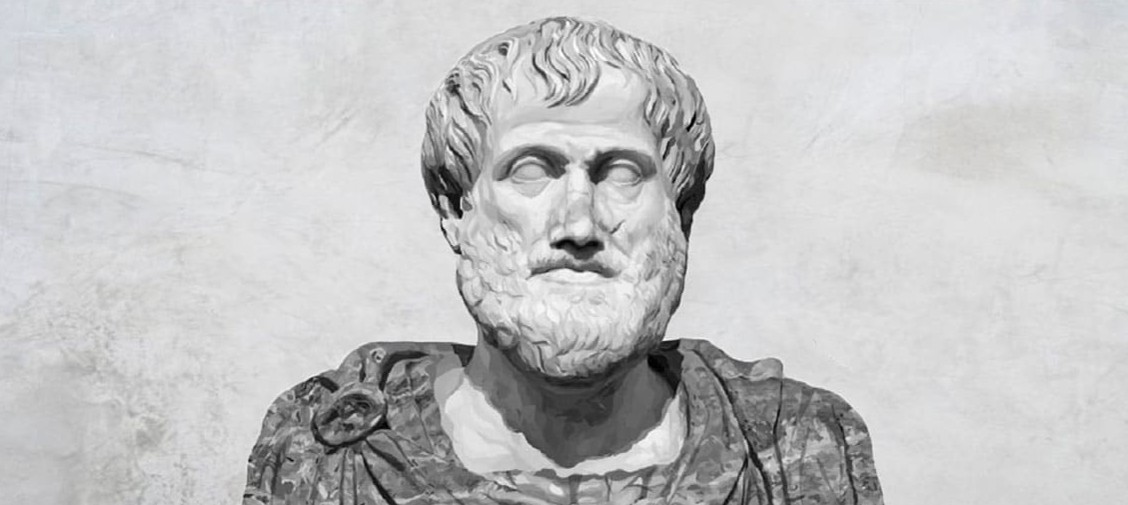
When you hear “ancient philosopher,” a few names likely spring to mind. Plato, Socrates, and then there’s Aristotle. But this wasn’t just another long-bearded sage contemplating the universe; Aristotle was, in many ways, the original polymath, a man whose ideas laid the groundwork for virtually every field of human inquiry.
From the structure of a logical argument to the ideal form of government, from the classification of animals to the very nature of happiness, Aristotle didn’t just ask questions – he built entire frameworks for understanding the world. And believe it or not, his wisdom is still remarkably relevant today.
Who Was This Intellectual Powerhouse?
Born in Stagira, Greece, in 384 BC, Aristotle was a student of Plato at the Academy in Athens. While he greatly respected his teacher, he famously “loved the truth more,” diverging from Plato’s world of perfect Forms to focus on the observable world around him. He later became the tutor to none other than Alexander the Great, influencing one of history’s most powerful figures.
Aristotle’s intellectual appetite was insatiable. He wrote on:
- Logic: Systematizing reasoning with syllogisms.
- Physics: Exploring motion, causality, and the cosmos.
- Biology: Observing and classifying thousands of species.
- Ethics: Defining the “good life” and the nature of virtue.
- Politics: Analyzing different forms of government.
- Metaphysics: Investigating existence and reality itself.
- Rhetoric & Poetics: Understanding persuasion and the art of storytelling.
It’s fair to say, if there was a subject, Aristotle probably had a highly influential opinion on it.
Three Enduring Aristotelian Ideas Still Relevant Today:
1. The Pursuit of “Eudaimonia” (The Good Life)
Forget fleeting happiness; Aristotle was after something deeper: Eudaimonia. Often translated as “flourishing” or “living well,” it’s not just a feeling, but a state of being achieved through rational activity and living virtuously. For Aristotle, true fulfillment comes from realizing our full human potential.
How it applies today: In our fast-paced, consumer-driven world, we’re constantly searching for “happiness.” Aristotle reminds us that it’s not about instant gratification, but about building a meaningful life, developing character, and contributing positively to society. It’s the ultimate guide to self-improvement and purpose.
2. The Golden Mean (Virtue as Balance)
Aristotle believed that virtue lies in avoiding extremes. The Golden Mean suggests that moral behavior is a midpoint between two vices: one of excess and one of deficiency.
- Courage, for example, is the mean between recklessness (excess) and cowardice (deficiency).
- Generosity is the mean between extravagance and stinginess.
- Humor is the mean between buffoonery and boorishness.
How it applies today: This concept is a powerful tool for navigating personal and professional challenges. It encourages us to seek balance in all aspects of life – from our work-life balance to our emotional responses. It promotes moderation, self-awareness, and thoughtful decision-making, rather than impulsive reactions.
3. The Power of Persuasion (Rhetoric: Ethos, Pathos, Logos)
In his treatise “Rhetoric,” Aristotle broke down the art of effective communication into three core appeals:
- Ethos (Credibility): Persuading by the character and authority of the speaker. (Think of an expert giving advice.)
- Pathos (Emotion): Persuading by appealing to the audience’s emotions. (Think of an advertising campaign.)
- Logos (Logic): Persuading by the use of reasoning and facts. (Think of a scientific presentation.)
How it applies today: These principles are the bedrock of modern communication, marketing, public speaking, and even political debate. Every time you try to convince someone, write a compelling email, or even just tell a good story, you’re instinctively (or consciously) drawing on Aristotle’s timeless insights into human psychology and persuasion.
Beyond the Bust: Why He Still Matters
Aristotle’s legacy isn’t just about ancient texts; it’s woven into the fabric of Western thought. He taught us:
- To observe the world empirically before making grand theories – a cornerstone of modern science.
- To think logically and critically, to spot fallacies and construct sound arguments.
- To strive for excellence and flourishing in our individual lives and in our communities.
- To understand the dynamics of human interaction and the power of effective communication.
So, the next time you hear the name Aristotle, remember he wasn’t just a figure from a dusty history book. He was a revolutionary thinker whose ideas are still profoundly shaping how we live, how we learn, and how we understand ourselves and the world around us. Perhaps it’s time to dig a little deeper into his wisdom and see how it can enrich your own “eudaimonia.”