When you think of bears, images of towering grizzlies, massive polar bears, or formidable black bears often come to mind. But nestled in the lush rainforests of Southeast Asia is a species that defies these large stereotypes, standing as the undisputed champion of “small” in the Ursidae family: the Malayan Sun Bear.
The Tiny Titan
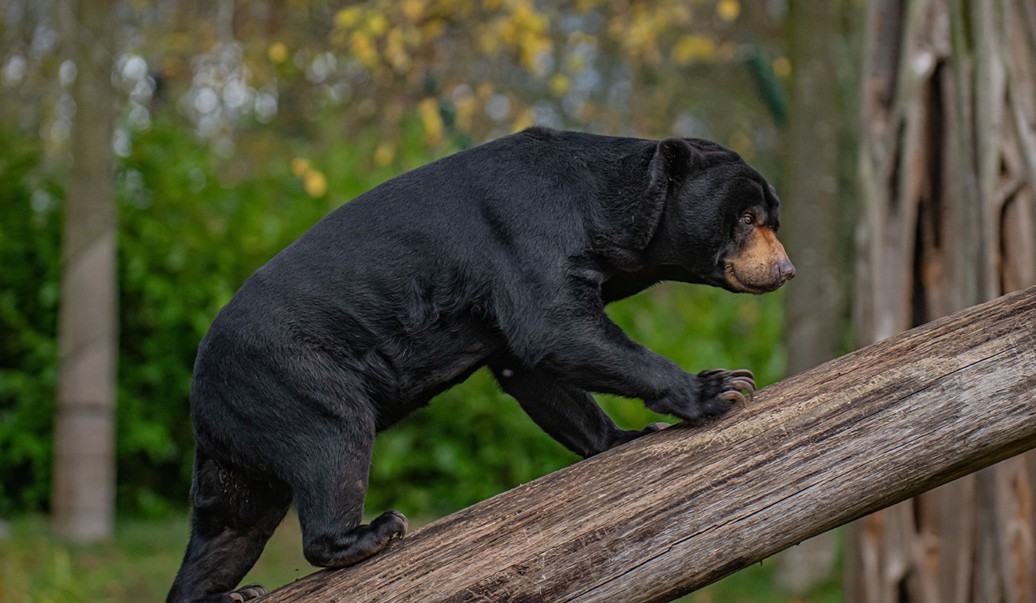
Officially known as Helarctos malayanus, the Sun Bear truly lives up to its “small” reputation. Adults typically stand only 4-5 feet tall on their hind legs and weigh a modest 60-150 pounds, making them roughly the size of a large dog. Their compact, muscular build allows them incredible agility in the trees.
Their most striking feature is their sleek, short, black fur, which helps them navigate the hot, humid jungle environment. But what truly sets them apart is the distinctive golden or orange crescent-shaped patch on their chest, which often leads to their nickname “sun bear” – though some believe it represents the rising sun.
Beyond their iconic chest mark, Sun Bears possess several unique adaptations:
- Long Tongue: Measuring up to 10 inches, their remarkable tongue is perfect for extracting honey from beehives, insects from logs, and grubs from the ground.
- Long Claws: Their unusually long, sickle-shaped claws are non-retractable and ideal for tearing open rotting logs, climbing trees, and digging.
- Loose Skin: Their loose neck skin allows them to turn around and defend themselves if attacked by predators like tigers, even if the predator has a grip on their neck.
A Life in the Canopy
These pint-sized bears are perfectly adapted to their tropical rainforest homes, spanning from northeast India through Southeast Asia, including countries like Malaysia, Thailand, and Indonesia. Unlike many other bear species, Sun Bears are highly arboreal, spending much of their lives in trees. They are expert climbers, using their powerful limbs and long claws to navigate the canopy, where they forage for food and even build nests to sleep in.
Sun Bears are primarily nocturnal, preferring to forage under the cover of darkness, though they can sometimes be seen during the day. They are generally solitary animals, coming together only for mating. Their elusive nature makes them difficult to study in the wild.
Diet of Delights
Their Malay name, “Beruang Madu” (Honey Bear), is a direct nod to one of their favorite foods. Sun Bears have an insatiable sweet tooth and will use their formidable claws to tear into trees to get at wild beehives. But their diet is far more varied, making them omnivores. They feast on:
- Insects: Termites, beetle larvae, ants, and other invertebrates.
- Fruit: A wide variety of tropical fruits.
- Small Vertebrates: Lizards, rodents, and birds, when available.
- Palm Hearts and Plant Shoots: Providing essential nutrients.
Their incredible sense of smell helps them locate hidden food sources, and their powerful jaws and teeth are designed to crack open nuts and tear apart tough plant material.
Facing the Shadows
Despite their fascinating adaptations, Malayan Sun Bears are classified as “Vulnerable” by the IUCN, with their numbers rapidly declining. The primary threats they face are:
- Habitat Loss: Massive deforestation for palm oil plantations, agriculture, and logging is fragmenting and destroying their rainforest homes.
- Illegal Wildlife Trade: Sun Bears are poached for their bile and paws, which are used in traditional medicine, and increasingly for the illegal pet trade, often leading to cruel conditions for cubs.
- Human-Wildlife Conflict: As their habitat shrinks, Sun Bears sometimes venture into human settlements, leading to conflict.
The Malayan Sun Bear is more than just the smallest bear; it’s a vital, albeit often overlooked, component of its ecosystem, playing a crucial role in seed dispersal and insect control. Protecting these “tiny titans” requires global awareness, conservation efforts to preserve their diminishing habitats, and stringent measures to combat the illegal wildlife trade. Only then can we ensure the continued survival of this unique and enchanting forest dweller.