
As interim NASA administrator, Transportation Secretary Sean Duffy, formerly a Fox News host, is poised to announce expedited plans this week for building a nuclear reactor on the moon. This marks his first significant policy initiative in the role. While NASA has previously considered a lunar reactor, Duffy’s initiative, supported by internal documents, establishes a more concrete timeline, notably coinciding with significant budget cuts facing the agency. The decision also highlights Duffy’s intent to actively shape NASA policy, despite facing criticism from lawmakers regarding his dual roles.
A senior NASA official, speaking anonymously due to the documents not yet being public, stated, “It is about winning the second space race.” President Donald Trump appointed Duffy as interim administrator in July, following the abrupt withdrawal of billionaire Jared Isaacman’s nomination due to a dispute involving Isaacman’s ally, Elon Musk.
Duffy has also issued a directive to accelerate the replacement of the International Space Station, another key NASA objective. These two initiatives are expected to hasten U.S. efforts to establish a presence on the moon and Mars, a strategic goal also actively pursued by China. These plans align with the Trump administration’s emphasis on crewed spaceflight. The White House’s proposed budget for 2026 includes increased funding for human spaceflight, even while advocating for substantial cuts to other programs, such as a nearly 50 percent reduction for science missions.
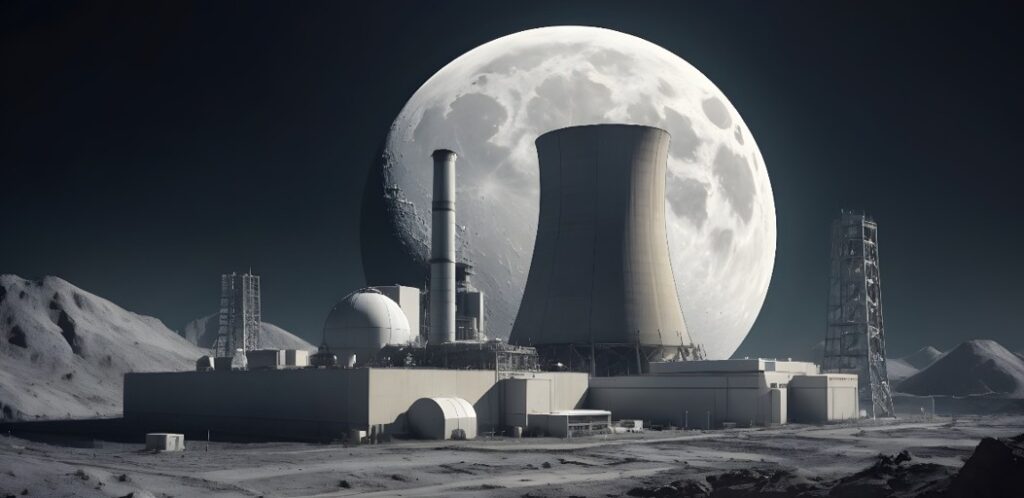
Specifically, the reactor directive mandates that NASA solicit industry proposals for a 100-kilowatt nuclear reactor, aiming for a 2030 launch. This reactor is deemed crucial for supporting astronauts’ long-term return to the lunar surface. NASA had previously funded research into a smaller, 40-kilowatt lunar reactor, with initial plans for its readiness by the early 2030s. The directive explicitly warns that the first nation to deploy a lunar reactor could “declare a keep-out zone which would significantly inhibit the United States.” This reflects the agency’s apprehension regarding a joint lunar project initiated by China and Russia.
The directive further instructs NASA to appoint a leader for this endeavor and to obtain industry input within 60 days. NASA is specifically seeking companies capable of launching a reactor by 2030, as this timeframe aligns with China’s projected timeline for landing its first astronaut on the moon. This nuclear initiative signifies NASA’s continued involvement in nuclear development, even following the Pentagon’s recent cancellation of a joint program focused on nuclear-powered rocket engines. The NASA official clarified, “While the budget did not prioritize nuclear propulsion, that wasn’t because nuclear propulsion is seen as a non-worthy technology.”
The separate space station directive aims to replace the aging and increasingly leaky International Space Station with commercially operated platforms, achieved by fundamentally altering the agency’s contract award process. NASA intends to award contracts to at least two companies within six months of issuing its request for proposals (RFP). Officials are targeting a new station in orbit by 2030, a critical deadline as otherwise, China would be the sole nation with a permanently crewed space station. Several private companies, including Axiom Space, Vast, and Blue Origin, have emerged to meet this demand for commercial space stations. However, lawmakers have recently voiced concerns that NASA is not allocating the necessary funds quickly enough to these companies.
Source: Politico