Introduction
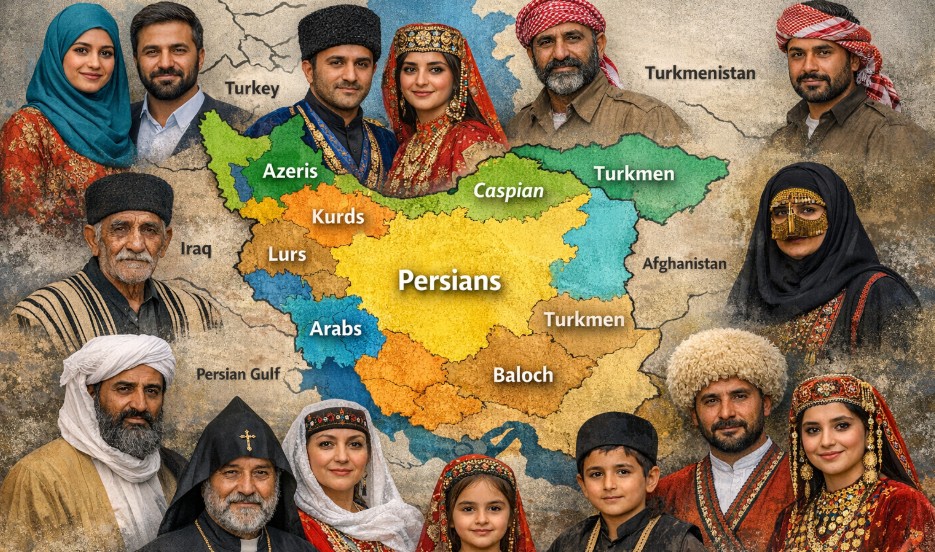
Iran is one of the most ethnically diverse countries in the Middle East, shaped by thousands of years of migration, empire-building, and cultural exchange. While often perceived as a largely homogeneous nation, Iran is in fact a complex mosaic of ethnic groups, languages, and traditions that coexist within its borders.
Historical Background
The ethnic diversity of Iran can be traced back to ancient times, when the region was part of major empires such as the Achaemenid, Parthian, and Sassanian dynasties. These empires ruled over vast territories and incorporated a wide variety of peoples, laying the groundwork for the multicultural society that exists today.
Persians: The Majority Group
Persians constitute the largest ethnic group in Iran, making up an estimated 50–60% of the population. They primarily speak Persian (Farsi), which is also the official language of the country. Persian culture, literature, and history have had a dominant influence on Iran’s national identity.
Azeris: The Largest Minority
Azeris, also known as Azerbaijani Turks, are the largest ethnic minority in Iran, accounting for roughly 15–25% of the population. They predominantly live in the northwest regions, particularly in provinces such as East Azerbaijan and West Azerbaijan. Azeris speak Azerbaijani, a Turkic language, and maintain strong cultural traditions.
Kurds: A Distinct Cultural Identity
Kurds form another significant ethnic group, primarily residing in western Iran near the borders with Iraq and Turkey. They make up around 7–10% of the population. Kurdish communities have their own language, traditions, and a strong sense of identity, which distinguishes them from other groups.
Lurs and Bakhtiari
The Lurs and Bakhtiari people inhabit southwestern Iran, especially in the Zagros mountain region. They speak Luri, a language closely related to Persian, and are known for their tribal structures and nomadic heritage. Their cultural practices remain an important part of Iran’s diversity.
Arabs of Iran
Arab communities in Iran are mainly concentrated in the southwestern province of Khuzestan. They represent about 2–3% of the population. Iranian Arabs speak Arabic and often maintain cultural ties to the broader Arab world, while also identifying as Iranian citizens.
Baloch People
The Baloch population resides primarily in southeastern Iran, in the province of Sistan and Baluchestan. They make up roughly 2% of the population. The Baloch speak the Balochi language and have distinct cultural and social traditions that set them apart from other ethnic groups.
Turkmen Communities
Turkmen people are found mainly in northeastern Iran, near the border with Turkmenistan. They speak the Turkmen language, another member of the Turkic language family. Their culture includes unique traditions in music, clothing, and horse breeding.
Smaller Ethnic Groups
In addition to the major groups, Iran is home to several smaller communities, including Armenians, Assyrians, Georgians, and Circassians. Although they represent a small percentage of the population, these groups contribute significantly to Iran’s cultural and religious diversity.
Language Diversity
Iran’s ethnic diversity is reflected in its linguistic landscape. While Persian serves as the official language and lingua franca, many Iranians speak regional languages at home. This multilingual environment highlights the country’s rich cultural heritage.
Religion and Ethnicity
Although the majority of Iranians are Muslim, primarily adhering to Shia Islam, religious practices can vary among ethnic groups. For example, some Kurds and Baloch are Sunni Muslims, while Armenians and Assyrians are predominantly Christian. Religion often intersects with ethnic identity in meaningful ways.
Cultural Integration and Challenges
Despite its diversity, Iran has maintained a relatively strong national identity. However, ethnic minorities have sometimes faced challenges related to political representation, economic development, and cultural rights. Balancing unity with diversity remains an ongoing issue.
Conclusion
Iran’s ethnic composition is a testament to its long and complex history. The coexistence of multiple ethnic groups, languages, and traditions enriches the country’s cultural landscape. Understanding this diversity is essential for gaining a deeper appreciation of Iran’s society and its place in the world.
Sources
- Demographics of Iran – Ethnic Groups Overview
- Encyclopaedia Britannica – People of Iran
- Council on Foreign Relations – Iran’s Ethnic Groups
- Al Jazeera – A Simple Visual Guide to Iran and Its People
- Iran – General Overview and Demographics
- Lurs – Ethnic Group in Iran
- Khuzestani Arabs – Ethnic Minority in Iran